Swing blocking has become one of the most widely used blocking techniques in modern volleyball, especially at elite and collegiate levels. Known for its explosive power and ability to penetrate the net, swing blocking helps players reach greater height and close blocks more effectively than traditional shuffle-based techniques. If your team wants to slow down powerful wing hitters or shut down fast-paced offenses, swing blocking is a skill you must understand.
This guide breaks down exactly what swing blocking is, how it works, when to use it, and how to execute it with precision. Whether you are a coach, middle blocker, outside blocker, or opposite, this article gives you everything you need to elevate your blocking game.
What Is Swing Blocking?
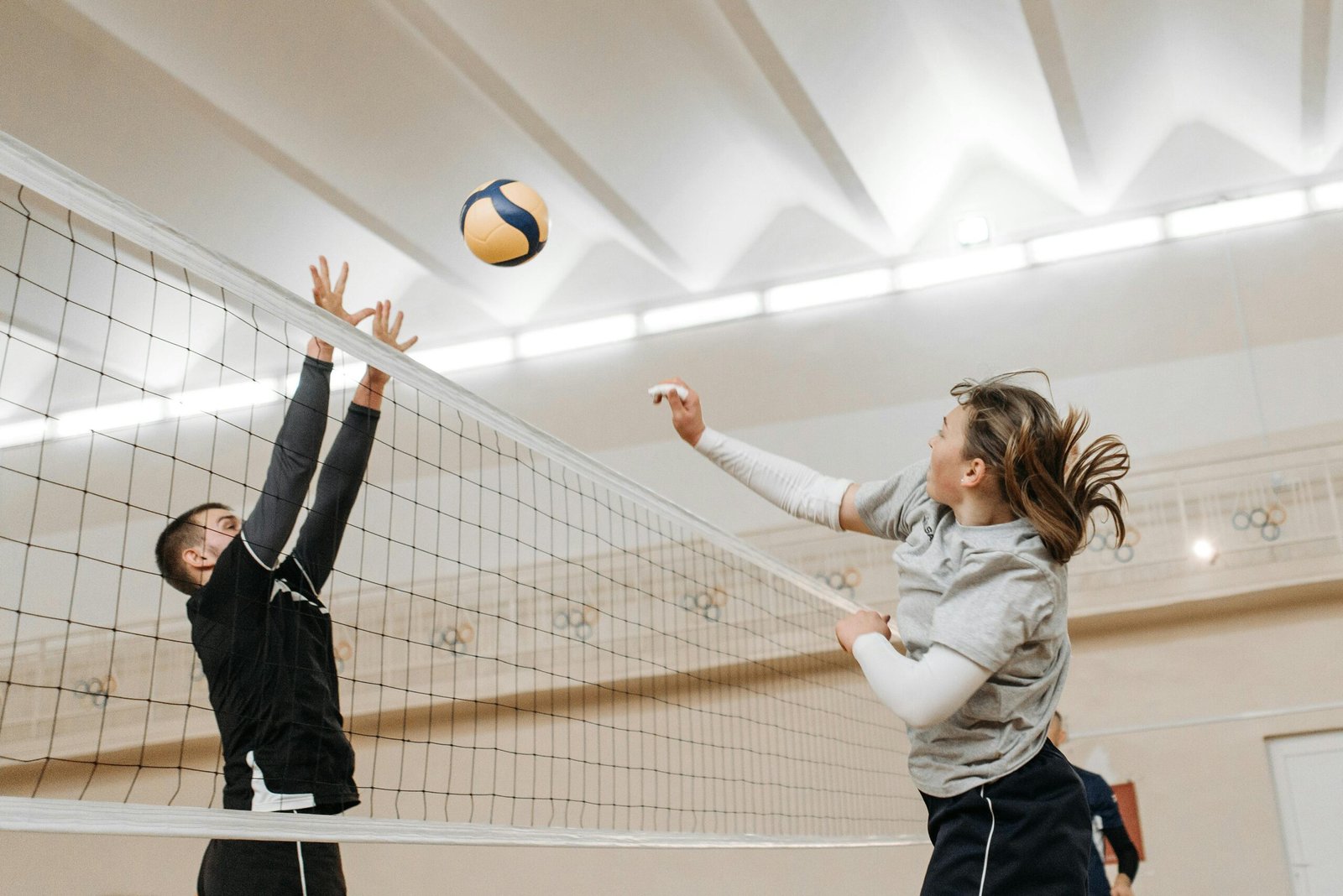
Swing blocking is an advanced blocking technique where blockers generate additional momentum by using an arm swing during their jump. Rather than jumping from a static or shuffle position, players load their arms backwards and swing them upward to create extra height, speed, and penetration.
Unlike traditional blocking, which prioritises stability and small steps, swing blocking prioritises:
- Explosive vertical power
- Strong lateral movement
- Greater reach over the net
- Faster closing speed with teammates
Swing blocking is especially popular in systems where middles must close blocks quickly or where hitters attack with high velocity from the wings.
Why Swing Blocking Is Effective
Swing blocking provides multiple benefits compared to conservative blocking styles:
Increased Vertical Jump Height
The arm swing improves overall explosiveness, giving blockers a higher point of contact.
Better Penetration
The added momentum allows block hands to push further over the net, cutting off hitting angles.
Faster Closing
Using a crossover step followed by a jump helps middle blockers travel more efficiently to the pins.
More Aggressive Defensive Tactics
Swing blocking can overwhelm attackers and create more stuff blocks.
Improved Timing Rhythm
The arm swing helps blockers coordinate jump timing with the hitter’s attacking motion.
Because of these advantages, the technique has become a staple in competitive men’s and women’s volleyball around the world.
When to Use Swing Blocking
Swing blocking is not appropriate for every scenario. It works best in the following situations:
Against Powerful Wing Hitters
Hitters who attack with pace require a block with height and strength. Swing blocking closes angles faster.
When Running a Fast Defensive System
If your team prioritises quick movement and dynamic footwork, swing blocking integrates seamlessly.
When Facing High Sets to the Outside or Opposite
High-ball attacks give blockers enough time to set up a coordinated swing block.
When Your Team Has Trained Synchronised Block Timing
Swing blocking requires all blockers to jump together. Well-coached teams can execute it consistently.
When Bigger Blocking Presence Is Needed
If your team struggles with penetration or giving up tool shots, swing blocking adds physicality.
When Swing Blocking Is Not Ideal
Even with its benefits, swing blocking is not perfect for every team.
Avoid swing blocking when:
- Facing quick tempo sets (e.g., low balls to the outside)
- Playing against hitters who frequently tip or roll
- Your blockers struggle with timing
- Defenders rely on stable funnel systems requiring block predictability
- Your team lacks experience with coordinated blocking systems
If timing is off, swing blocking creates large gaps and seams that attackers can exploit.
Footwork for Swing Blocking
Executing swing blocking well starts with footwork. The most common pattern uses a crossover step into a jump.
Step-by-Step Swing Block Footwork
- Starting Position: Feet shoulder-width apart, hands in ready position
- Read the Setter: Identify where the ball is going
- Crossover Step: Lead with the foot closest to the direction of the block
- Pivot Step: Plant both feet square to the net
- Load: Bring arms backward while bending knees
- Explode Upward: Swing arms forward and upward, driving the body vertically
- Press Over the Net: Extend arms forward, not upward
- Land Balanced: Come down square, ready for transition
Middle blockers often perform longer, more aggressive crossover steps when travelling to the pins.
Hand Positioning and Arm Mechanics
The arm swing is the defining feature of this technique.
Key Mechanics
- Pull arms behind the torso to load power
- Swing arms upward violently to generate lift
- Keep elbows locked once extended
- Angle wrists to take away the hitter’s favourite lane
- Penetrate hands over the net before peak jump height
Players must avoid over-swinging, which can cause forward drift.
Timing the Swing Block
Because swing blocking adds moving parts, timing must be precise.
Timing Cues
- Watch the setter’s release
- Start footwork once the pass height is clear
- Load your arms during the hitter’s final approach steps
- Jump as the hitter begins to open their shoulder to swing
Jumping too early results in floating in the air. Jumping too late leaves hitters unchallenged.
Middle Blocker Role in Swing Blocking
Middles are the engine of the swing block. They set timing, movement, and tempo for the entire block.
Key responsibilities:
- Identify offensive patterns
- Travel quickly to either pin
- Communicate loudly during set recognition
- Make the final sealing step in the block
- Close seams between blockers
A strong middle blocker turns swing blocking into a coordinated wall rather than isolated jumps.
Outside and Opposite Blockers in Swing Blocking
Outside Blockers
They face the most attacks, so their swing block consistency is crucial. Outside blockers must:
- Start footwork early
- Read the hitter’s angle
- Avoid drifting down the line
- Stay balanced for transition after landing
Opposite Blockers
Opposites often block powerful outside hitters. They require:
- Strong crossover movement
- Stable take-off position
- Extra penetration over the net
- Good communication with the middle
Common Mistakes When Swing Blocking
Even advanced players struggle with key pitfalls:
Drifting
Blockers who swing too far backward before jumping drift under the net.
Late Timing
Jumping after the hitter makes contact offers no defensive pressure.
Swinging Too Early
Loading arms too soon reduces blocking height.
Poor Footwork
Mistimed crossover steps leave blockers off-balance.
Lack of Seams
Failure to close the block with teammates results in free cross-court angles.
Drills to Improve Swing Blocking
1. Footwork Shadow Drill
Blockers practice crossover-to-jump movement without balls.
2. Arm Load and Swing Drill
Players rehearse the arm load and explosive swing in isolation.
3. Partner Timing Drill
One player acts as a hitter; the blocker times their jump with the swing.
4. Pin-to-Pin Movement Drill
Middles move from left to right pin, performing repeated swing blocks.
5. Live Hitter Drill
Real attackers hit while blockers practise timing and positioning.
These drills build muscle memory and consistency.
Coaching Tips for Swing Blocking
- Train the footwork before adding arm mechanics
- Use video to analyse timing and drift
- Keep blockers tight and connected
- Reinforce penetration over height
- Avoid teaching swing blocking to beginners
- Pair swing blocking with strong backcourt funnel systems
- Reward good timing, not just stuff blocks
Final Thoughts
Swing blocking is one of the most powerful tools in modern volleyball defence. When executed correctly, it produces taller, more imposing blocks and helps teams close space quickly. While it requires strong coordination and high athletic ability, it pays off with more controlled touches, more stuff blocks, and less scoring room for attackers.
If you commit to mastering the footwork, timing, and mechanics, swing blocking can transform your team’s defensive identity and elevate your blocking presence to a new level.