As padel continues to explode in popularity worldwide, more players are looking to invest in the right gearRacket sports have long been popular for their combination of fitness, fun, and friendly competition. Tennis has been a global staple for centuries, dominating the sporting landscape with iconic tournaments like Wimbledon and the US Open. But in recent years, a new challenger has entered the scene: padel. Exploding in popularity across Europe and rapidly spreading worldwide, padel is often described as a blend of tennis and squash. At first glance, the two sports look similar, but when you step onto the court, the differences become obvious.
If you’re curious about trying padel or simply want to know how it stacks up against the more established game of tennis, this guide will walk you through everything you need to know. We’ll explore courts, equipment, rules, strategies, and accessibility, while also considering fitness benefits and cultural impact. By the end, you’ll have a clear picture of what separates padel from tennis and which might be the right sport for you.
A Brief History of Tennis and Padel
Tennis: A centuries-old tradition
Modern lawn tennis was formalised in the late 19th century, though its origins stretch back to earlier European games like real tennis. The sport quickly gained international recognition and became a prestigious part of global culture, particularly through its four Grand Slam events. Tennis has a rich history of athletic rivalries, technological advances in rackets, and iconic playing surfaces that influence how the game is played.
Padel: The modern upstart
Padel, by contrast, is a newcomer. Invented in Mexico in 1969 by Enrique Corcuera, the sport spread to Spain and Argentina before taking Europe by storm. Its growth has been extraordinary, with thousands of courts built in the last decade and millions of players taking up the game. Padel is designed to be more accessible and social than tennis, with doubles as the standard format. Its rise mirrors a growing appetite for community-driven sports that combine exercise with fun.
Court Dimensions and Design
One of the most obvious differences between the two sports is the playing environment.
- Tennis court: 23.77 metres long and 8.23 metres wide for singles, or 10.97 metres wide for doubles. The court is open, with no walls, and divided by a net that stands 91.4 cm high at the centre. Courts can be clay, grass, or hard surface.
- Padel court: 20 metres long and 10 metres wide, enclosed by glass and mesh walls that rise up to 4 metres high. The net is slightly lower, measuring 88 cm at the centre. Courts are usually artificial turf filled with sand, creating a softer and slower playing surface.
The enclosed nature of padel dramatically changes the flow of the game. Unlike tennis, where a ball that leaves the lines is out, in padel the walls are part of play. Balls can rebound off the glass, extending rallies and introducing squash-like strategies. The smaller court size also encourages faster exchanges and more teamwork.
Equipment: Rackets and Balls
Tennis racket
Tennis rackets are strung, with a large oval head and long handle. They range in weight from 260–320 grams for most players and require a degree of technique to master, particularly when it comes to spin and power. Tennis balls are pressurised felt spheres, slightly larger and bouncier than their padel counterparts.
Padel racket
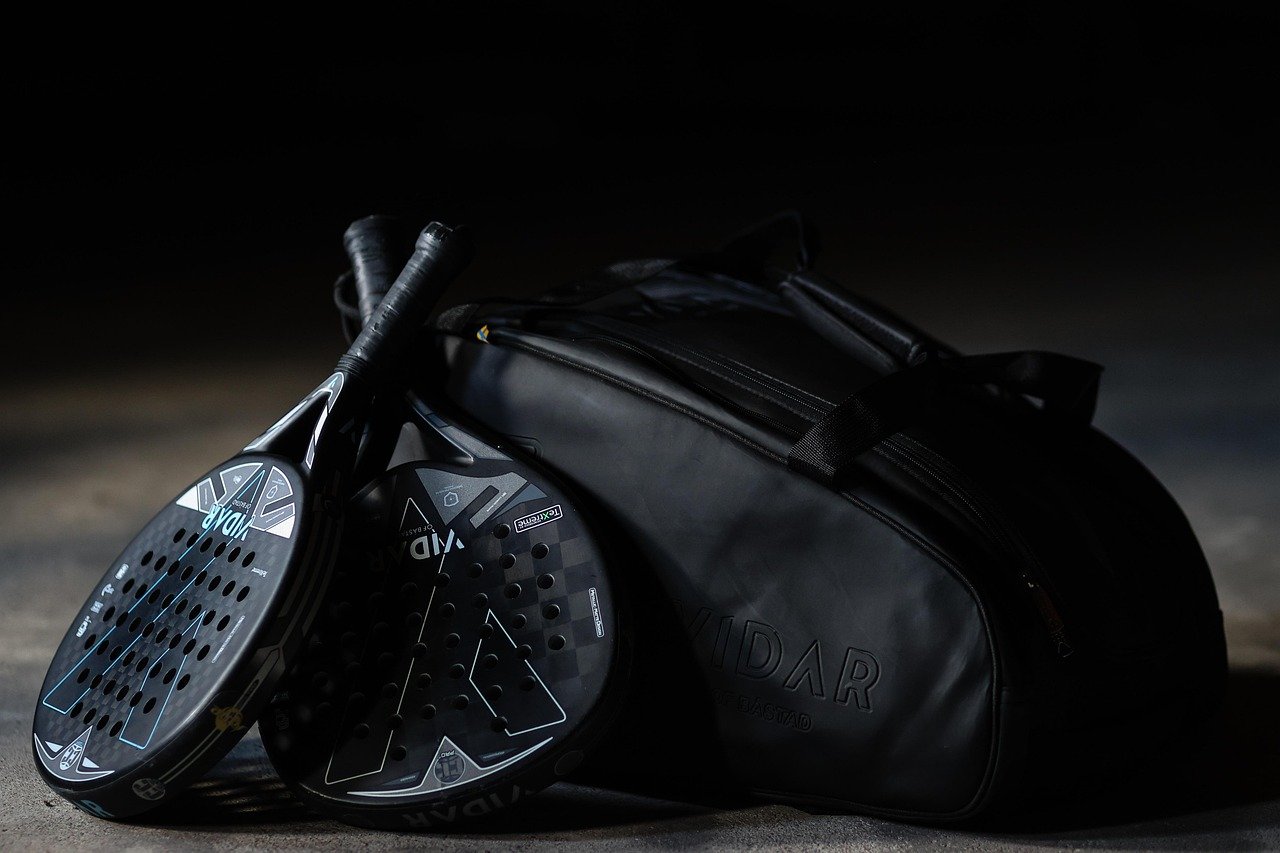
Padel rackets are distinctive: solid, perforated, and without strings. They are typically made from carbon fibre or composite materials, weighing between 340–390 grams. Shapes vary between round, diamond, and teardrop, each offering a different balance of control and power. Padel balls are similar to tennis balls but slightly smaller and less pressurised, producing lower bounce.
The equipment differences mean that padel rallies are generally less reliant on sheer power and more focused on placement, angles, and teamwork. Tennis, meanwhile, allows for more variety in spin and shot speed due to the stringed racket.
Rules and Scoring
Both sports share similarities in scoring, but gameplay mechanics diverge.
- Scoring: Both padel and tennis use the familiar 15–30–40–game system, with sets usually played to six games. Tiebreaks at 6–6 are also common in both sports.
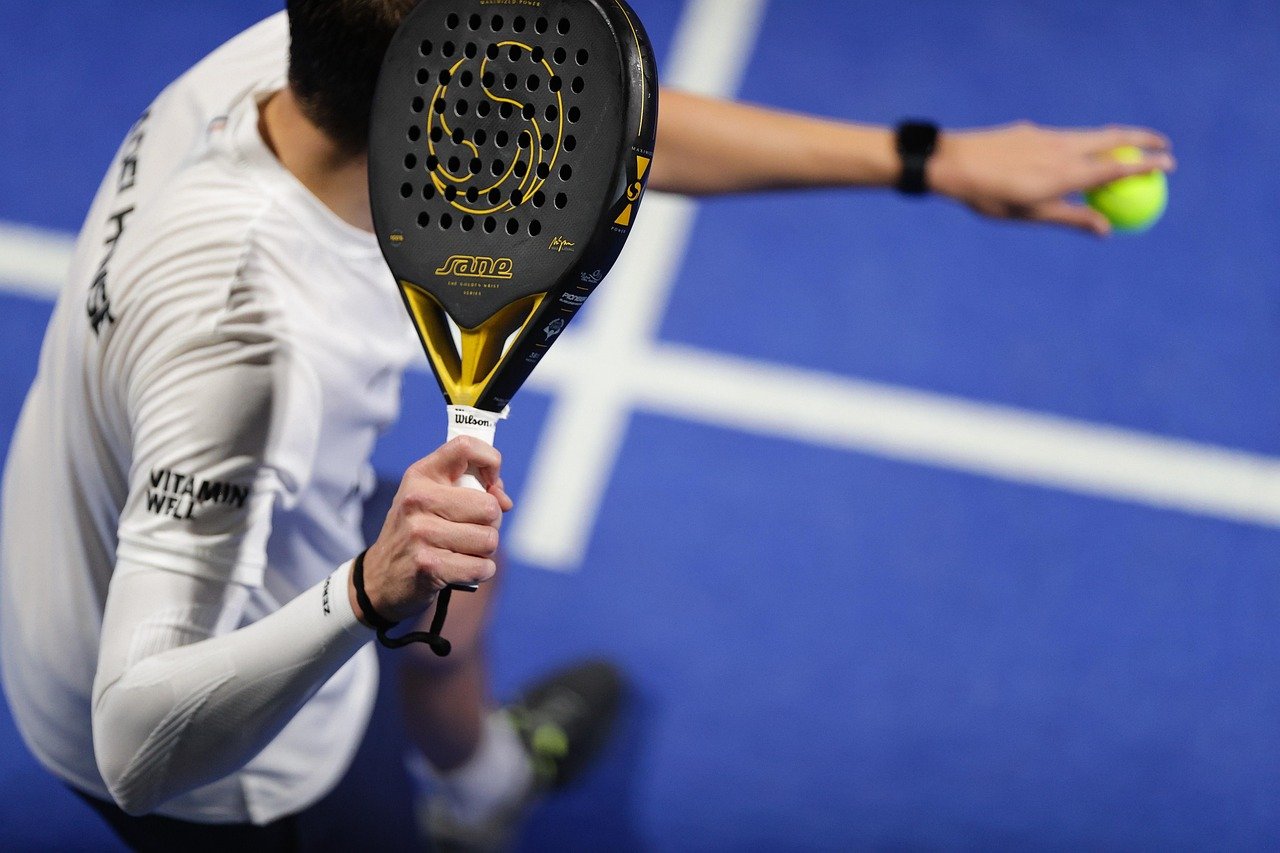
- Serving: In tennis, players serve overhead, often at speeds exceeding 200 km/h at the professional level. In padel, the serve must be underhand, struck below waist height after a bounce, making it easier to return and keeping rallies more balanced.
- Gameplay: Tennis points are won by hitting winners past the opponent or forcing errors. In padel, the ball must bounce once before hitting the walls, and shots off the glass can be retrieved, making rallies longer and more tactical.
Singles vs Doubles
- Tennis: Singles is the most prestigious format, though doubles is also a respected discipline. Singles requires significant stamina and one-on-one shot-making ability.
- Padel: Doubles is the default, with singles courts existing but rarely used. The game emphasises teamwork, positioning, and communication more than individual shot power.
This difference is one of the key reasons padel is often seen as more approachable for beginners.
Playing Style and Strategy
Tennis strategy
Tennis matches often revolve around serve dominance, baseline rallies, and exploiting an opponent’s weaknesses. Power and endurance play central roles, especially in singles. Surface type also heavily influences tactics, with clay favouring long rallies and grass suiting serve-and-volley players.
Padel strategy
Padel is all about patience, positioning, and smart use of walls. Rather than blasting winners, players look to construct points carefully, moving opponents out of position and finishing at the net. Communication with your partner is vital, and anticipation often outweighs raw power.
The sport is sometimes described as chess with a racket because of its tactical depth.
Physical Demands and Fitness Benefits
Both padel and tennis deliver excellent workouts, but the demands differ.
- Tennis: Requires explosive sprinting, strong aerobic fitness, and upper-body power. Matches can be long and physically draining, especially in singles.
- Padel: Involves shorter sprints, constant lateral movement, and lower-impact rallies. The underhand serve and smaller court size make it more accessible to a wider range of ages and fitness levels.
In general, tennis is more physically taxing, while padel is more inclusive. Both burn calories, improve coordination, and enhance reflexes.
Accessibility and Learning Curve
Tennis has a steeper learning curve. New players often struggle with serving, consistency, and long rallies, which can make early sessions frustrating. Padel, by contrast, is much easier to pick up. Because of the enclosed court and forgiving serve, beginners can enjoy extended rallies from the first day. This accessibility has been one of padel’s biggest drivers of growth.
Social and Cultural Aspects
Padel is seen as more social by design, since doubles is the standard format and matches tend to be more forgiving for casual players. It’s increasingly popular in clubs, where players rotate partners and enjoy the community atmosphere. Tennis carries more prestige globally and has an established professional circuit with major international tournaments. Its cultural impact is larger, but padel is rapidly catching up, particularly in Europe and Latin America.
Professional Scene and Growth
Tennis has the ATP and WTA tours, legendary champions, and global events watched by millions. Padel’s professional scene is newer but growing quickly, with the World Padel Tour and Premier Padel drawing top players and significant sponsorship. Media coverage is expanding, and as more countries adopt the sport, its visibility will only increase.
Which Sport Is Right for You?
The choice often depends on your preferences:
- Choose tennis if you enjoy individual competition, don’t mind a steep learning curve, and want to test your endurance and shot-making at a high level.
- Choose padel if you prefer a social sport that is easier to learn, with fast rallies, teamwork, and inclusive gameplay.
Many players enjoy both, finding that their skills in one complement the other.
Final Thoughts
Padel and tennis may look similar on the surface, but the experience of playing them is very different. Tennis offers tradition, prestige, and individual challenge, while padel delivers accessibility, teamwork, and fast-paced fun. Both sports provide excellent exercise and mental stimulation, making them worthwhile in their own ways.
As padel continues to expand globally, the choice doesn’t have to be either-or. Many clubs now offer both tennis and padel courts, giving you the freedom to try both. Ultimately, the best way to decide is to step onto the court, racket in hand, and experience the difference for yourself.